How Do Encoders Make Different Resolutions for Different Users?
In today’s streaming landscape, delivering high-quality video tailored to each user’s device and bandwidth is no longer a luxury — it’s a necessity. Whether viewers are watching a multi-camera studio production, tuning in via a mobile website, or engaging through an online casino app, the video stream must adapt dynamically. This is the story of how encoders create multiple video renditions in real-time, powering seamless adaptive streaming experiences.
Multi Rendition Encoding Explained
At the heart of adaptive streaming lies multi rendition encoding. Simply put, the encoder takes the same source video and creates multiple versions of it at different resolutions and bitrates simultaneously. Each version is a rendition in what’s commonly called a bitrate ladder.
Why multiple renditions? Because users connect with vastly different devices and internet speeds. Someone on a 5G mobile connection with a large 4K TV needs a high-res, high bitrate stream. Meanwhile, another user on a congested public Wi-Fi using a smartphone benefits more from a lower resolution and bitrate version.
The Bitrate Ladder and Adaptive Delivery
The bitrate ladder is an ordered set of video renditions ascending from low to high bitrates and resolutions. The streaming client selects the best fit rendition depending on network speed and device capability. This approach is often termed adaptive delivery. It prevents buffering and ensures smooth playback while maximizing streaming quality where possible.
Example Bitrate Ladder Resolution Bitrate (Mbps) Use Case 426x240 0.3 Low bandwidth mobile 640x360 0.7 Mobile websites, slower connections 854x480 1.2 Standard Definition (SD) streaming 1280x720 3.0 HD for tablets and mid-range devices 1920x1080 6.0 Full HD multi-camera studios or desktopsMulti-Camera Studio Production: Lighting and Visual Consistency
Bringing this to live multi-camera studios—something the Society of Motion Picture and Television Engineers (SMPTE) has long worked to standardize—adds layers of complexity.
Multiple cameras capturing different angles require meticulous lighting adjustments to maintain visual consistency across cuts. Otherwise, the viewer experiences jarring color shifts and brightness disparities that disrupt immersion.
For encoding, here's the kicker: each camera feed is often encoded separately, but the final stream may be either a single video switcher output or multiple renditions of the program feed. Hardware encoders from vendors often evaluated by sites like Hardware Times must sustain constant color fidelity and sharpness even after aggressive compression.
What Happens When This Box Overheats at Hour 9?
Pro-grade hardware encoders handling multi-camera streams run hot—literally. Our mental checklist always asks, “What happens when this box overheats at hour 9?” Thermal throttling can degrade encoding quality or cause dropouts just when the spotlight’s on.
Redundancy here is king. Encoding racks typically include failover devices, and monitoring tools send alerts to operators checking for degraded performance.
Mobile-First Streaming Constraints
The majority of video consumption now happens on mobile devices through apps and mobile-optimized websites. Online casino apps are a great example — users demand crisp gaming action with minimal latency even on constrained networks.
Mobile-first design forces engineers to rethink bitrate ladders to include extra-low resolutions and aggressively optimize compression. Mobile screens are smaller, so higher resolutions provide diminishing returns compared to bandwidth costs.
But it’s not just about screen size: mobile networks fluctuate wildly, so streaming protocols working with adaptive delivery, like HLS and DASH, are critical to switch renditions on-the-fly.
Encoding and Compression: Balancing Quality and Bandwidth
Encoding algorithms compress video frames based on codecs — H.264, H.265 (HEVC), or emerging AV1 and VVC standards. Each codec balances compression efficiency against device compatibility and computational cost.
Higher compression lowers bitrate for a given quality, which improves streaming experiences on limited bandwidth but consumes more CPU power in encoders and decoders.
- Tradeoff #1: Aggressive compression can cause artifacts and motion smearing, especially critical in fast-paced scenes or multi-camera feeds.
- Tradeoff #2: Real-time encoding for live streams must minimize latency without sacrificing picture integrity.
Teams at companies like MRQ leverage advanced hardwaretimes encoder profiles and tune parameters to maintain the delicate balance between visual fidelity and compression. Monitoring tools constantly verify sync between video and audio, frame drops, and buffering incidents.
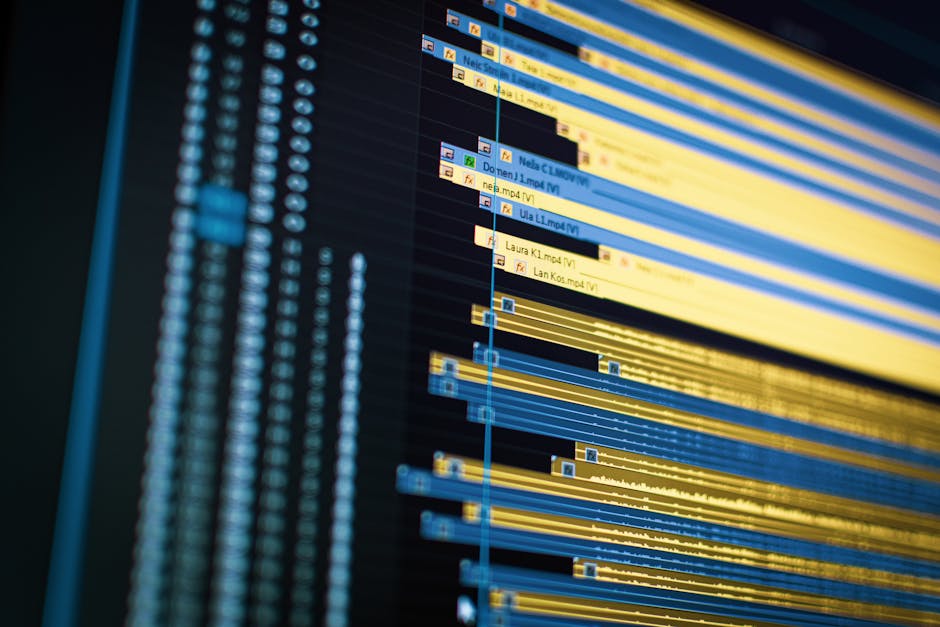
How Modern Encoders Handle Multi Rendition Encoding
Today's hardware and software encoders employ a combination of real-time transcoding and packetized delivery to create and deliver multi-version streams efficiently:
- Input capture: Multi-camera feeds or live program output are captured in high-quality uncompressed or lightly compressed formats.
- Encoding farm: GPUs and ASICs encode multiple renditions in parallel, applying different resolution and bitrate presets.
- Segment packaging: Streams get chopped into chunks (segments) — often 2 to 6 seconds long — and packaged into formats like HLS or DASH.
- Distribution: Content delivery networks (CDNs) distribute these chunks worldwide, ready for adaptive clients to pick and switch between renditions seamlessly.
Proper synchronization between renditions is critical, particularly when switching during playback. Any padding or drift causes glitches.
Conclusion
From multi-camera studios illuminated with precise lighting, through the constraints of mobile-first streaming, to the engineering mastery behind encoding and compression, multi rendition encoding is a foundational technology for modern video delivery.
Understanding how the bitrate ladder and adaptive delivery works brings clarity amid buzzwords. Moreover, keeping a watchful eye on hardware endurance and synchronization safeguards keeps professionals ahead of streaming disasters.
Whether you’re an online casino app developer, a broadcast engineer, or a video platform architect, mastering these principles helps create smooth, visually consistent video experiences tuned perfectly to each user’s device and network.
